Waldorf, Maryland
Pet Stain and Odor Removal in Waldorf, MD
Pet Stain and Odor Removal in Waldorf, Maryland, planned around your carpet and priced plainly per room before we start.
Waldorf, Maryland
Pet Stain and Odor Removal in Waldorf, Maryland, planned around your carpet and priced plainly per room before we start.
You can scrub a pet spot until the carpet looks clean and still smell it on the first humid night of June. That is the frustration that brings most Waldorf dog owners to us: the stain is gone from the surface, guests say the room looks fine, and yet the smell keeps its own schedule, rising whenever Charles County humidity rolls through an open window. The reason is simple. What you cleaned was the top of the pile, and what a dog leaves behind rarely stops there.
Waldorf is a yard town. Big fenced lots, wooded edges in Bensville and Bryans Road, and long commutes mean dogs spend real hours indoors on carpet, and accidents follow patterns: the spot by the back door that did not open fast enough, the corner a puppy chose during training, the landing where an older dog rests all afternoon. Each repeat visit to the same place sends moisture deeper, through the pile into the padding, and odor lives at the deepest level it reaches.
Urine does not behave like a juice spill. It soaks through carpet fibers into the padding below, spreads wider than the visible mark, and as it dries it leaves salts and organic material that keep drawing moisture from the air. On a dry winter day a treated spot may seem solved, then a humid week reactivates everything stored in the padding and the smell returns as if nothing was done. That cycle is why surface products disappoint, no matter how faithfully they are applied.
The visible stain is also a poor map of the real problem. A small circle on top can sit over an area two or three times wider in the padding, especially on thick carpet where liquid travels sideways along the backing. Treating only what you can see leaves the outer ring untouched, and that ring is often what the nose finds first when you walk into the room. Our first job on any pet visit is finding the true outline of the soiling before a single product comes out.
Age of the pet matters as well. Puppy accidents come in clusters during training and are usually caught fast. An aging dog with kidney trouble produces weaker looking spots that carry a heavier odor load, and cats concentrate in corners and along baseboards where their scent marking instinct points them. Each pattern asks for a slightly different treatment plan, and we talk through which one your home has before quoting the work.
We begin with inspection, using light and moisture readings to map every affected area, including the ones nobody knew about. Old accidents announce themselves under the right light long after their color has left the pile, and finding them all at the start keeps the result even. We mark the full map with you, agree on the treatment list room by room, and explain what each area should realistically give back before we begin.
Treatment starts with an enzyme product applied at the depth the soiling reached. Enzymes work on the organic material itself rather than covering its smell, breaking down what bacteria feed on so the odor source is consumed instead of masked. This step cannot be rushed: the product needs real dwell time, often the better part of an hour per room, while we stage the rest of the work around it. Perfume based cover products have no place in the process, since a room should smell like nothing when we leave, not like flowers over a problem.
Extraction follows at padding depth once the dwell is complete. We draw the loosened material up through the carpet with repeated passes until the rinse runs clear, then clean the surrounding carpet so the treated zone blends with the rest of the room. Where a spot has soaked through more than once, we may work the area, let it rest, and work it again rather than flooding it once, since controlled passes pull more out of padding than a single heavy soak. Finished rooms get airflow placed on them, because lower levels and interior corners in Waldorf homes dry slowly and damp padding can hold a faint note if it sits wet.
Honesty is part of this service. When repeat soiling has saturated a wide stretch of padding, cleaning can improve the room a great deal and still not finish the job, and in those cases we will say so plainly and explain that replacing the padding under a cleaned carpet is the step that closes it out. Most homes never reach that point, and we would rather map the real situation than sell a result the carpet cannot deliver.
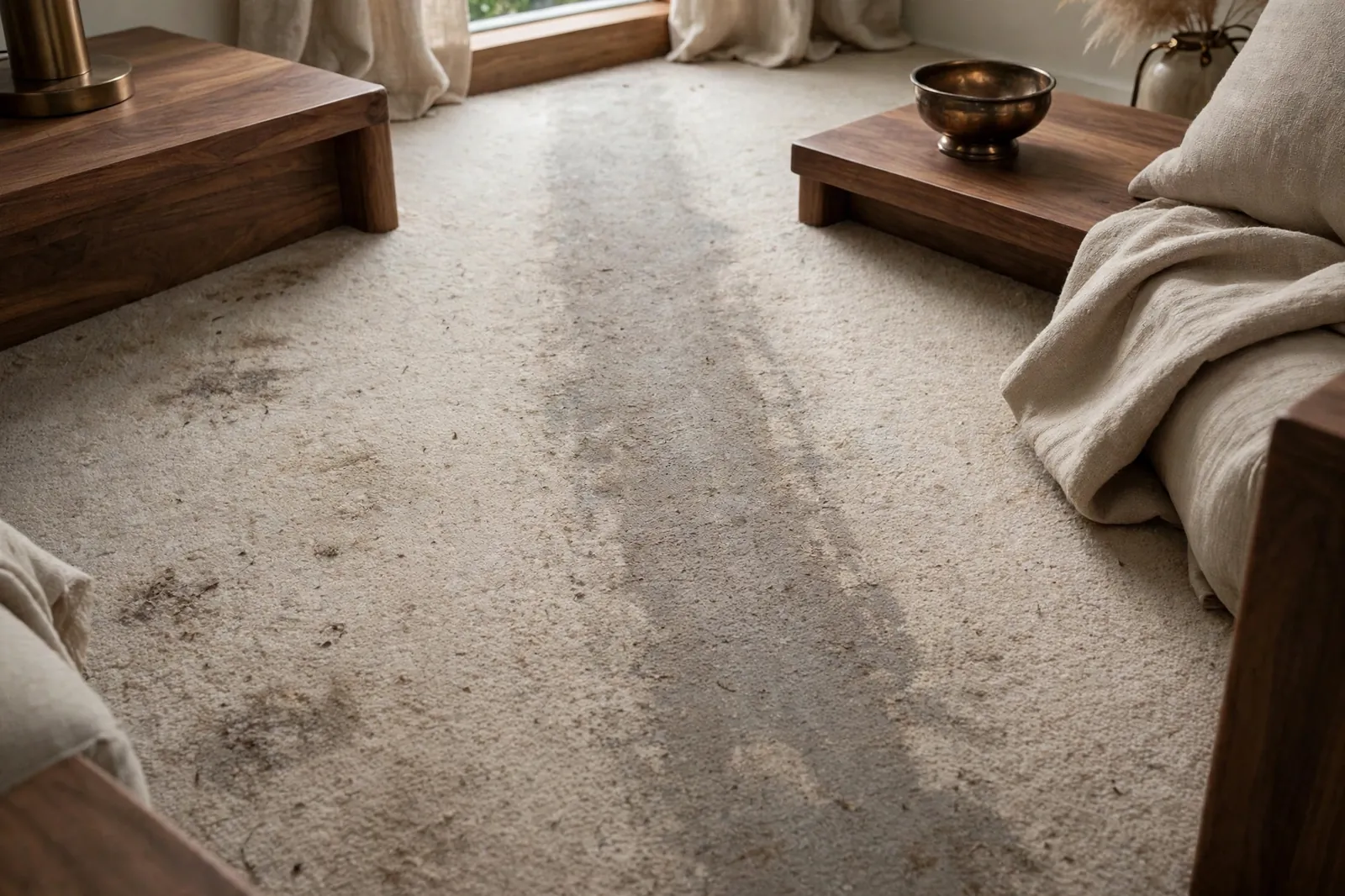
A senior dog in a Carrington townhome had settled on one family room corner and the nearby landing, and the smell announced the room before the door fully opened. We mapped both areas with light and moisture readings, gave the enzyme treatment a full dwell, and extracted at padding depth until the rinse ran clear, then cleaned both rooms fully so the treated zones blended in. By the following weekend the rooms smelled neutral with the windows closed.
Pet urine and odor treatment runs $80 to $150 per room, covering the inspection mapping, enzyme treatment with full dwell time, and extraction at padding depth. Standard carpet cleaning in the same rooms runs $75 to $150 per room, and most pet visits combine the two, since treated areas need the surrounding carpet cleaned to blend and the rest of the room usually carries its share of tracked soil.
The figure moves with the number of rooms involved and how deep the soiling has gone. A single room with one recent accident prices at the low end, while several rooms with repeat spots need more product, more dwell staging, and more extraction passes. We mark every spot with you during inspection and price the treatment list plainly before work begins, so each addition is something you approved rather than something that appears on the bill.
The treated areas stay fresh longest when the pattern that caused them changes a little. Puppies in training do well with the accident corner blocked or covered during the weeks after a visit, and older dogs benefit from more frequent trips outside during humid stretches when they drink more. We will point out the exact spots we treated so you can watch them, and a small home enzyme product used quickly on a fresh accident keeps new soil from ever reaching the padding.
Drying matters too. The rooms we treat should get air movement for the rest of that day, and keeping the dog off the treated corner until it is fully dry protects the work while the last moisture leaves the padding. Most families find the house returns to normal the same evening, with the treated rooms simply smelling like the rest of the home again.
Treatment runs $80 to $150 per room, including the inspection mapping, enzyme dwell time, and extraction at padding depth. When the same rooms also get a standard cleaning at $75 to $150 per room, we price the combined list together after walking the home with you.
Home cleaning reaches the top of the pile, while urine soaks into the padding and spreads wider than the visible mark. Dried salts in the padding pull moisture from humid air and reactivate the odor. Treating at padding depth with enzyme products is what breaks the cycle.
Most can, and the inspection tells us which ones will respond completely. Heavy repeat soiling that has saturated a wide area of padding has real limits, and when we find that situation we say so plainly and explain the padding replacement option instead of promising a result cleaning cannot give.
The enzyme products we use are made for pet households and are applied, given dwell time, and then extracted out of the carpet rather than left in it. We ask that pets stay out of the treated rooms during the visit and until the carpet is dry, which is the same guidance we give after any cleaning.
Plan on about an extra hour per room beyond a standard clean. The enzyme product needs genuine dwell time to work at padding depth, and we stage the visit so that time is used well, working other areas while treated rooms rest.
Yes, and basements are where we do a large share of this work in Waldorf, since dogs favor the cool lower level and accidents there dry slowly. We treat at padding depth and place extra airflow afterward, because a basement that dries fully keeps the result far longer.
Tell us about your rooms, your stairs, and any stains or pet spots you are worried about. We read every request that comes in and respond with a clear quote and the next steps for getting your carpet cleaned.
Prefer to talk it through first? Send the form and we will call you back at the number you give us.